



Let our team help you select the right product
Talk to our experts and we can help you meet all your product requirements from the beginning. Let us help you with your next project.

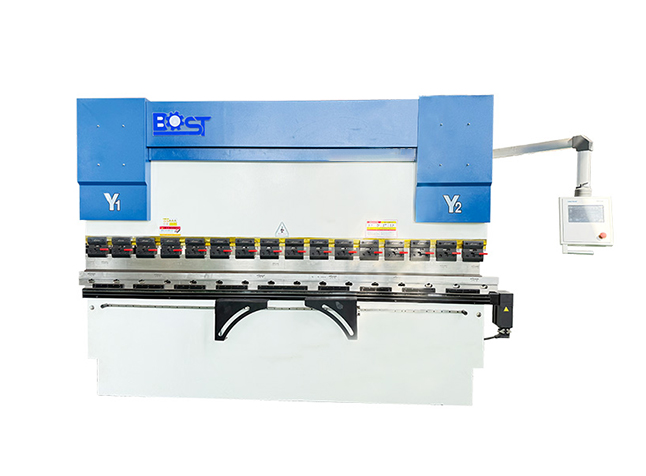
A High Speed Press Brake is a CNC bending machine built to improve bending efficiency through faster approach speed, controlled bending speed, fast return speed and optimized back gauge movement. The machine is suitable for sheet metal manufacturers that need both speed and accuracy in repeated bending operations.
Depending on the drive system, a high speed press brake can be designed as a High Speed Hydraulic Press Brake, a High Speed Servo Press Brake or a High Speed Electric Press Brake. Hydraulic models are often selected for larger tonnage and wider material capability, while servo electric models are often used for thin sheet, compact parts, energy-saving production and high-frequency bending. Industry comparisons commonly associate electric press brakes with faster response, lower maintenance and energy-saving operation, while hydraulic machines remain widely used for thicker materials and heavier bending.
A High Speed CNC Press Brake improves productivity by reducing non-cutting and non-bending time during each production cycle. In press brake operation, the ram normally moves through fast approach, controlled bending and fast return stages. Optimizing these stages helps shorten the total cycle time while keeping bending accuracy under control.
High speed production is not only about ram speed. Buyers should also consider CNC programming efficiency, back gauge movement speed, tooling change time, operator workflow, safety protection and repeatability. A machine with fast movement but poor setup efficiency may still fail to improve real production output.
The High Speed Press Brake Machine uses optimized ram movement to reduce the time required for approach and return. This helps increase bending cycles per hour, especially for small and medium sheet metal parts.
CNC control manages bending parameters, back gauge positioning and stored bending programs. This reduces manual adjustment and helps operators switch between repeated jobs more quickly. CNC press brakes use computerized control to manage functions such as ram motion, back gauge positioning, bending speed and pressure.
The high-speed back gauge system supports fast and accurate positioning before each bend. This is important for batch production, multi-step bending and parts with repeated flange dimensions.
Speed must be balanced with precision. A high speed press brake should use a rigid frame, stable drive system, Y1/Y2 synchronization, accurate back gauge and optional crowning system to maintain bending consistency during continuous production.
With stored programs, CNC controller support and optional quick clamp tooling, operators can reduce setup time between different products. This is useful for both high-volume production and small-batch multi-variety orders.
High speed operation requires reliable safety systems, such as light curtains, laser safety guards and emergency stop protection. Safety design is important because higher approach and return speeds increase the need for controlled operation.
| Comparison Item | High Speed Hydraulic Press Brake | High Speed Servo / Electric Press Brake |
|---|---|---|
| Drive System | Hydraulic cylinders and valve control | Servo motor, ball screw or belt drive |
| Best For | Medium to heavy-duty bending | Thin sheet and high-frequency bending |
| Speed Advantage | Strong force with stable production | Fast response and quick cycle |
| Energy Use | Higher energy consumption | Lower energy use in many applications |
| Maintenance | Requires hydraulic oil maintenance | Less hydraulic maintenance |
| Material Range | Wider material thickness range | Better for thin and medium sheets |
| Investment | Flexible by tonnage and configuration | Usually higher for advanced servo systems |
If your production focuses on thick plates, large tonnage or heavy-duty bending, a High Speed Hydraulic Press Brake may be more suitable. If your factory processes thin sheets, small parts and high-frequency bending jobs, a servo or electric high speed press brake may provide better efficiency and lower maintenance needs.
A High Speed Press Brake is suitable for industries that require fast, repeated and accurate sheet metal bending.
Common applications include:
Electrical cabinet and control box manufacturing
Metal enclosure fabrication
Stainless steel panel bending
HVAC duct and ventilation component production
Elevator panel manufacturing
Kitchen equipment and stainless steel products
Door frame and metal furniture production
Automotive brackets and light structural parts
Machinery covers and equipment guards
Precision sheet metal fabrication
Batch production of small and medium metal parts
For manufacturers with repeated bending jobs and tight delivery schedules, a High Speed CNC Press Brake can help improve workshop output and reduce waiting time between bending cycles.
| Comparison Item | Standard Press Brake | High Speed Press Brake |
|---|---|---|
| Main Focus | General bending capacity | Faster cycle time and productivity |
| Ram Movement | Standard approach and return speed | Faster approach and return movement |
| Back Gauge | Standard positioning | Faster and more efficient positioning |
| Setup Efficiency | Depends on operator and controller | Better with CNC programs and quick setup |
| Best For | General sheet metal bending | Batch production and high-output workshops |
| Investment Value | Lower initial cost | Better for factories needing higher output |
| Typical Applications | Standard metal fabrication | Repeated parts, thin sheets, high-volume production |
A High Speed Press Brake is recommended when production efficiency is a key concern. If the factory only produces low-volume or simple bending jobs, a standard CNC press brake may be enough. If the factory needs faster throughput, shorter cycle time and higher daily output, a high speed press brake is a better choice.
When selecting a High Speed Press Brake Machine, buyers should not only compare machine speed numbers. They should evaluate the complete bending process, including material, part size, tonnage, back gauge speed, controller functions, tooling and safety design.
Important selection factors include:
Required bending force and machine tonnage
Working length of the press brake
Sheet thickness and material type
Approach speed, bending speed and return speed
Back gauge travel speed and positioning accuracy
CNC controller and program storage capacity
Tooling change efficiency
Hydraulic, servo or electric drive system
Crowning system and bending accuracy requirement
Safety protection system
Production volume and cycle time target
Energy consumption and maintenance cost
For thin sheet and high-frequency bending, a servo electric high speed press brake may be a strong option. For thicker materials and larger bending force, a high speed hydraulic press brake may provide better versatility.
Relatedkeywords
Compact Press BrakeHeavy Duty Press BrakeHigh Tonnage Press BrakeMulti Axis Press BrakeTandem Press Brake100 Ton Press Brake400 Ton Press BrakeSmall Press Brake Machine63 Ton Press Brake600 Ton Press Brake160 Ton Press Brake40 Ton Press Brake6 Axis Press BrakeHigh Precision Press Brake4 Axis Cnc Press BrakeHigh Speed Press Brake8 Axis Press Brake300 Ton Press BrakeMini Cnc Press BrakeLarge Press Brake MachineEnergy Saving Press BrakeAutomotive Exhaust Pipe Bender800 Ton Press BrakeAutomatic Press Brake200 Ton Press Brake3 Axis Press BrakeLet our team help you select the right product
Talk to our experts and we can help you meet all your product requirements from the beginning. Let us help you with your next project.
