
Let our team help you select the right product
Talk to our experts and we can help you meet all your product requirements from the beginning. Let us help you with your next project.

Oct 08, 2026
When people search for Tandem Press Brake vs Single Machine: Pros and Cons, they usually want a practical buying answer, not a theory lesson. They are often comparing two purchase paths for China Press Brake production, and they need to know which option better fits their parts, tonnage, space, budget, automation plan, and future expansion. The real intention behind the search is usually to reduce risk before capital investment.
Many buyers are not only comparing equipment, but also comparing delivery time, installation difficulty, backup support, and the learning curve for operators. This is why a simple feature list is not enough. They need a comparison that reflects real workshop conditions, especially in sheet metal fabrication, structural fabrication, and heavy-duty bending applications.
A single press brake is one independent machine that bends sheet metal with one frame, one hydraulic system, and one control system. It is the most common structure in small and medium workshops. A tandem press brake uses two synchronized press brakes working together as one system, usually to handle longer parts, higher tonnage requirements, or flexible production needs.
In most China Press Brake applications, buyers first start with a single machine because it is easier to manage. As product length increases or tonnage requirements become more demanding, tandem systems become attractive because they extend the machine's usable range without forcing the buyer to purchase one very large and expensive machine.
The best comparison should begin with measurable parameters. Buyers usually care about capacity, length, stability, repeatability, control, and operating cost. These items affect both productivity and final part quality.
| Parameter | Single Press Brake | Tandem Press Brake |
|---|---|---|
| Bending length | Best for short to medium parts | Best for long parts and oversized workpieces |
| Tonnage | Fixed by one machine frame and hydraulic system | Combined tonnage with synchronized operation |
| Installation | Simpler and faster | More complex due to alignment and synchronization |
| Control system | Independent control, easy to learn | Advanced coordination control required |
| Workshop space | Lower footprint | Needs more floor space and clear feeding area |
| Maintenance | Lower complexity | More components, more coordination points |
| Flexibility | Excellent for general production | Excellent for mixed large-format production |
| Investment level | Lower initial cost | Higher initial cost |
For buyers evaluating BOST machines, this type of parameter table is useful because it makes the decision process visible. It also helps compare machine configuration, not just price. In many cases, the right choice is not the cheapest one, but the one that matches production reality.
A single press brake is often the most practical choice for general manufacturing. It is easy to install, easy to train, and easier to maintain. For workshops with stable part sizes and moderate tonnage requirements, one machine is usually enough to support daily production.
The disadvantages are also clear. A single machine cannot handle very long parts as efficiently, and once tonnage or bending length exceeds the machine's limit, the workshop may face bottlenecks. If the factory expands into large panels, long beams, or oversized enclosures, a single machine may become a limiting factor.
A tandem press brake is designed for more demanding production scenarios. It allows two machines to work together, which is useful when the part is too long for a single machine or when a higher combined bending capacity is needed. This makes it a strong option for large equipment manufacturing, steel furniture, electrical cabinets, transportation parts, and heavy sheet fabrication.
The tradeoff is that tandem systems require more planning. The machines must be aligned accurately, synchronized reliably, and operated by personnel who understand the coordination logic. If the workshop has inconsistent workflows or insufficient operator training, the extra complexity may reduce the expected benefit.
In real workshops, buyers care less about brochure claims and more about how the machine behaves during daily use. Stability, repeatability, speed, and downtime all affect return on investment. This is where the difference between tandem and single machines becomes more obvious.
From a daily production standpoint, a tandem setup can improve output when the plant regularly bends large workpieces. However, if the workpiece is small and frequent changeover is required, one machine may be faster and more efficient. In other words, tandem is not automatically better. It is better only when the job size and production pattern justify it.
Press brakes are industrial machines, so battery life is not a meaningful evaluation index in the same way as mobile devices. The better metric is uptime, control reliability, hydraulic stability, and long-run production continuity. Buyers should focus on how long the machine can run without interruption and how quickly it can recover from faults.
A single machine often offers better simplicity-driven uptime because there are fewer coordination points. A tandem press brake can also deliver excellent uptime, but only if the synchronization system, tooling, and operator management are properly controlled. For buyers, the practical question is not battery life, but whether the machine keeps producing accurate parts throughout the shift.
The best machine depends on the buyer's production structure. Different purchasing groups have very different priorities, and the right answer for one plant may be wrong for another.
If the buyer's main concern is flexibility for future product changes, tandem may offer more headroom. If the buyer's main concern is stable daily output with limited budget, a single machine is often the wiser first step.
Operation differs significantly between the two machine types. A single press brake usually follows a more direct workflow, while a tandem system requires more coordination between machine sections.
For tandem equipment, the process adds more alignment and synchronization checks. This increases setup time, but it is necessary to guarantee accuracy across the full bending length. Well-trained teams usually benefit from this process because the machine can then handle larger jobs with consistent quality.
If the buyer needs a simple, affordable, and easy-to-manage solution, a single press brake is the best starting point. If the buyer needs longer bending length, higher combined capacity, or more future growth room, a tandem press brake is more suitable.
For many China Press Brake buyers, the smartest decision is to buy according to current production volume and only pay for the capacity that will actually be used. That is why the best solution is often not the largest machine, but the most balanced one.
Purchasing teams usually need a clear checklist. The following questions help narrow the decision quickly.
If most answers point to simple, short, and moderate-duty work, single machine selection is usually enough. If most answers point to large, heavy, or long parts, tandem becomes the stronger option. For many companies, BOST can help customize the solution based on actual drawings and production goals, which is often more reliable than choosing only by catalog.
For China Press Brake buyers, the decision between tandem press brake and single machine should be based on actual factory use, not just purchase price. A single press brake is better for smaller and more stable production. A tandem press brake is better for larger, longer, and more demanding workpieces. Both can be excellent investments when matched correctly to the application.
If your workshop is focused on general sheet metal jobs, a single machine is usually the safest and most economical choice. If your business is moving toward large-format fabrication or you want more future capacity, a tandem system provides stronger expansion potential. In either case, selecting the right specification and the right manufacturer matters as much as the machine type itself.
For more industrial solutions and customized press brake options, BOST supports practical China Press Brake planning for different production needs. Learn more at //www.bostmachinery.com/data/watermark/main/20250613/684b94cabbd50_.webp.
Related News
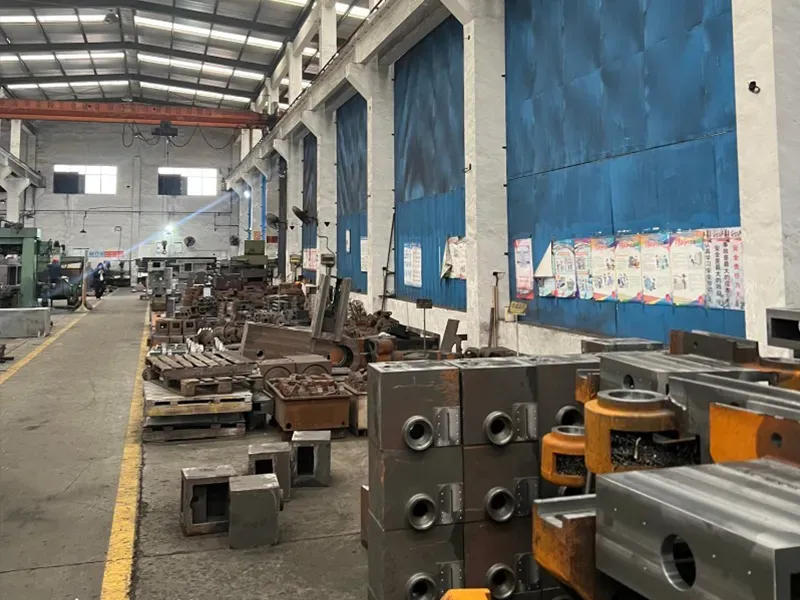
Hydraulic tubing bending standards and regulations
A Pipe Bending Machine helps factories make accurate bends in metal tubes and pipes without crushing the material. In many jobs, it is not enough to “just bend a pipe.” The bend angle, roundness, wall thickness, and repeatability all matter. That is why more buyers now search for a pipe bending machine for hydraulic tubing, a hydraulic pipe bending machine, or a pipe bending machine for steel
August 10, 2026
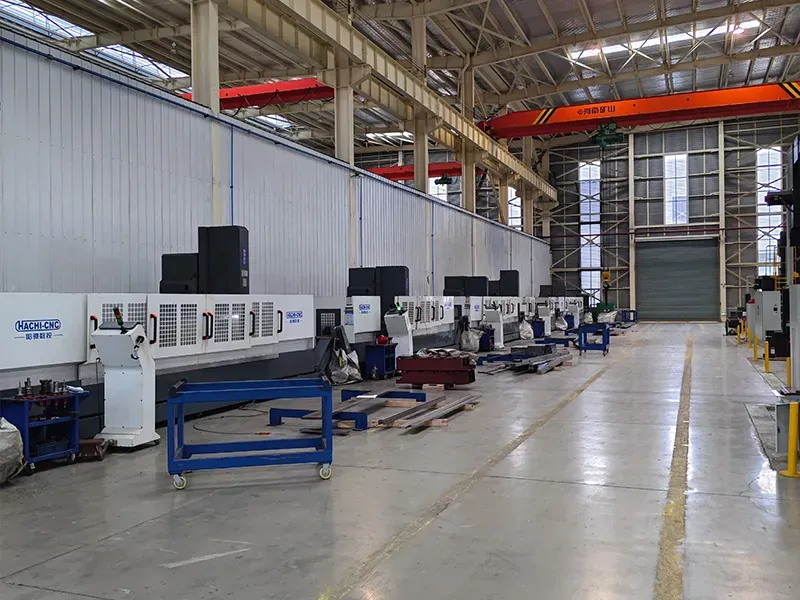
Hydraulic vs Electric Press Brake: Key Differences Explained
When buyers search for Hydraulic vs Electric Press Brake: Key Differences Explained, they usually want more than a simple definition. They want a practical buying guide that compares performance, cost, precision, energy use, maintenance, and real production suitability. This article is built around the questions most often raised by metal fabrication managers, shop owners, and procurement teams
August 07, 2026
How to bend hydraulic tubing without kinks
If you need to bend hydraulic tubing without kinks, the key is controlling bend radius, support, and material stress before the tube ever moves. In real shop work, most failures come from trying to “force” a tight bend by hand, using the wrong pipe bending machine, or ignoring wall thickness and minimum bend radius. This guide explains the full process, from choosing the right hydraulic tube
August 06, 2026
Let our team help you select the right product
Talk to our experts and we can help you meet all your product requirements from the beginning. Let us help you with your next project.
